

In a new report published on Human Rights Day, Project Masam has warned that landmine warfare in Yemen continues to inflict systematic violations of fundamental human rights, long after frontlines have shifted.
Evidence gathered across ten governorates between 2021 and 2025 shows a consistent pattern: anti-personnel and anti-tank mines, and improvised explosive devices (IEDs) are being laid directly in areas where civilians live, work and move. The consequences are visible in homes and courtyards, on grazing land and farmland, along water points and access roads, and even at archaeological sites of national significance, turning everyday civilian activity into a lethal risk.
Survivor testimonies collected by Project Masam illustrate the human cost behind these patterns.
Ahmed Saif Mahyoub stepped on a mine while walking home from work and lost both legs; he recalls lying on the ground unable to move as neighbours struggled to reach him because the surrounding area was also suspected to be mined.
Dalilah Abdo Ahmed, injured on her wedding day, reached a hospital unequipped to treat severe blast trauma, with an outcome now common as more than half of Yemen’s health facilities are only partially functioning.
In Al Dhale, young sisters Ilham and Iman Radwan uncovered several anti-personnel mines while playing beside their house, prompting clearance teams to later identify fifty devices laid around the family home. Their fear of stepping outside, and their father’s habit of checking the soil before allowing them to play, reflect how contamination strips children of safe spaces and disrupts education.
Livelihoods are similarly eroded. Farmers in Taiz, Marib, Hajjah and Shabwah describe abandoning fields after livestock and children were injured or killed. Beekeepers halted movement across grazing routes now seeded with mines. Entire families remain displaced because they cannot return to homes where dozens (or in some cases hundreds) of devices have been found.
Mosaid Mohammed Ali Naji, who has been displaced three times, returned to his village only to discover around 30 mines in his courtyard and nearly 150 in the surrounding area. He later triggered one while stepping into his yard. His description of life under contamination, which includes families trapped in single houses, children unable to attend school, and livelihoods collapsing when their flock was wiped out, underscores how landmines dismantle every layer of civilian life.
Even Yemen’s cultural heritage has not been spared. Mines laid around the archaeological zones of Timna and Hayd bin Aqeel prevented researchers from accessing ancient structures belonging to the Kingdom of Qataban, obstructing national efforts to preserve and study sites listed on UNESCO’s Tentative World Heritage List.
Reflecting on these findings, Managing Director Ousama Algosaibi stated: “The deployment of landmines in civilian areas is a moral outrage and a direct breach of the very legal frameworks meant to protect civilians. Yemen is a State Party to the Mine Ban Treaty and a signatory to core human rights conventions, yet these obligations are being violated every time a device is planted in a home, a field or a child’s play area. Landmine contamination represents the collapse of the protections that international law promises, and civilians are paying the price.”
The report also makes clear that these violations are not isolated or accidental: landmines laid by Houthi forces and their allies continue to endanger civilians with near-total impunity, while the international community has so far had little influence on halting their use, leaving Yemeni families exposed to ongoing, unlawful threats to their most basic rights.
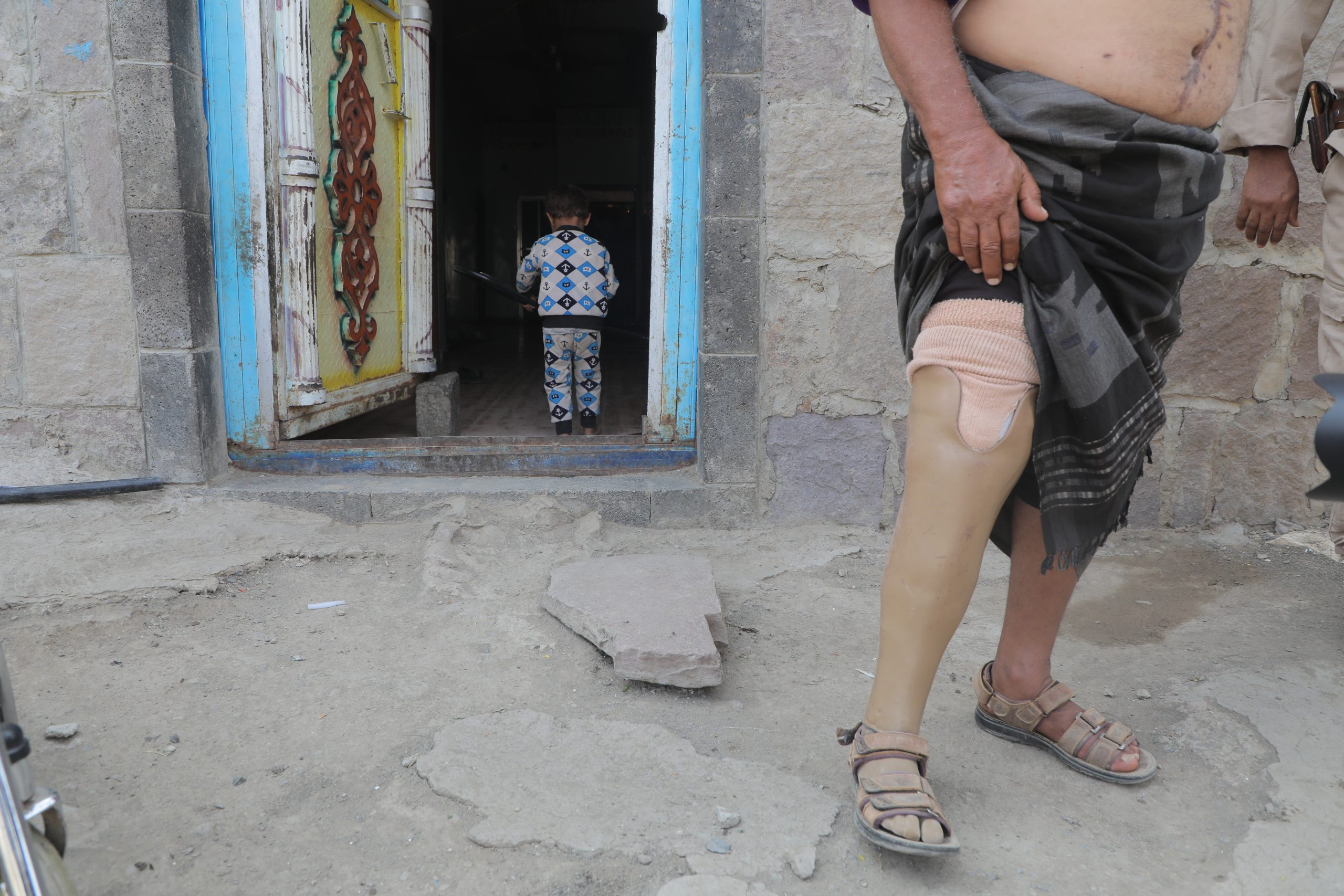
Making clear that meaningful civilian protection requires immediate action, Project Masam therefore puts forward the following recommendations:
1. Ensure immediate compliance with international humanitarian law (IHL), including an end to the use of anti-personnel mines and improvised equivalents in civilian areas. This obligation rests primarily with Houthi forces and their allies, as well as all other terror groups. Upholding IHL requires sustained international pressure through United Nations (UN) mechanisms, sanctions targeting those responsible for prohibited weapons use, public reporting by the UN Panel of Experts, and diplomatic engagement by States Parties to the Mine Ban Treaty. Continued documentation by humanitarian mine action organisations – such as Project Masam – is essential for accountability.
2. Expand, fund and prioritise clearance operations in the most contaminated civilian areas – including residential zones, access roads, farmland and schools.
Clearance must be carried out by accredited operators such as Project Masam, the Yemen Executive Mine Action Centre (YEMAC-IRG), and other international humanitarian demining organisations. Funding should come from donor states and organisations, with prioritisation guided by humanitarian impact: areas where contamination most severely restricts civilian safety, mobility and access to services.
3. Increase survivor assistance – including emergency trauma care, prosthetics, rehabilitation, psychosocial support, and safe transport. This requires financing and delivery through the World Health Organisation (WHO), the United Nations Population Fund (UNFPA), the United Nations Children’s Fund (UNICEF), the International Committee of the Red Cross (ICRC) and medical humanitarian NGOs. Given the collapse of Yemen’s health infrastructure, survivor assistance must rely on mobile medical teams, strengthened referral pathways and subsidised transport to facilities capable of treating severe blast injuries.
4. Strengthen risk-education programmes that reach communities most exposed to contamination, particularly children, displaced families and rural populations. Risk education is delivered by mine action actors (Project Masam, YEMAC-IRG, UN Mine Action Service (UNMAS), and humanitarian NGOs) with support from donor states and organisations. Programmes must adapt to local conditions; through schools where safe, gendered education when appropriate, localised community outreach, mobile teams, radio messaging and digital platforms that can reach remote areas.
5. Protect and safely restore access to cultural heritage sites affected by mine contamination, and activate relevant international agreements governing their protection; including the UNESCO Convention Concerning the Protection of the World Cultural and Natural Heritage (Paris, 1972) and other applicable instruments. Clearance around heritage zones should be coordinated with Yemeni cultural authorities such as the General Organisation of Antiquities and Museums, supported technically by UNESCO and archaeological partners. Donor states and organisations should assist efforts to stabilise, document and preserve sites once safe access is re-established, preventing irreversible cultural loss.
6. Support early livelihood restoration in areas verified as safe, financed and implemented through donor states and organisations (without reliance on national budgets or the stability that does not currently exist.) This includes small-scale, conflict-resilient interventions such as restoring access to agricultural land post-clearance, replacing essential tools or livestock, cash-for-work linked to community recovery, and support for micro-enterprises. These activities should occur only where clearance has been confirmed and conditions allow civilians to safely resume basic economic activity.
The full report, including detailed findings, exclusive survivor interviews and original photography documenting the human impact of contamination, is available in full here.