
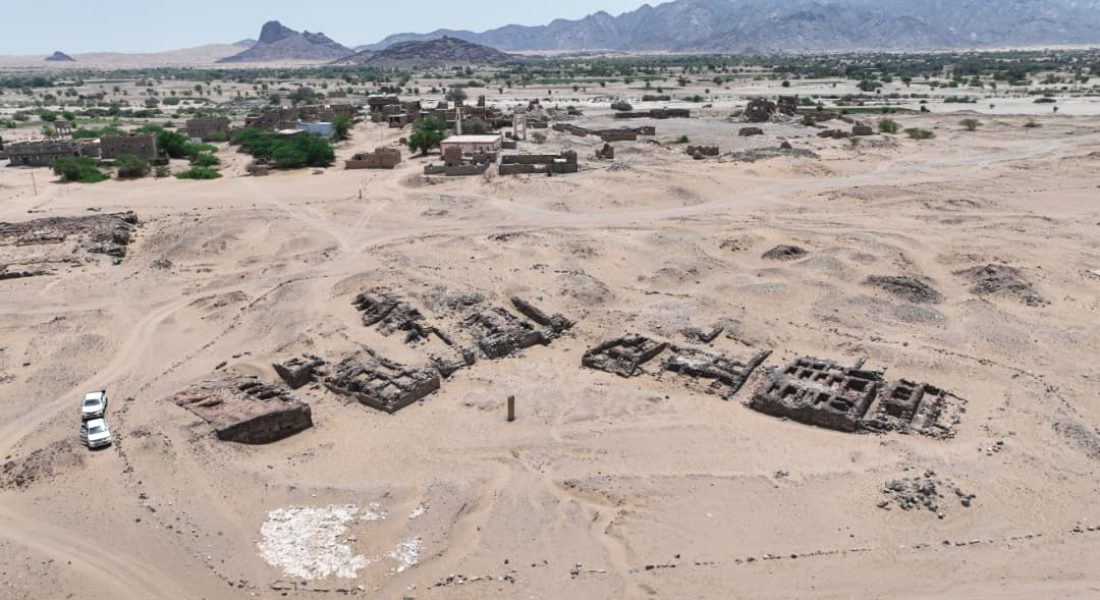
Project Masam demining teams have secured several major archaeological sites in Shabwah Governorate after clearing them of landmines and explosive devices planted by Houthi forces during the conflict. These operations have restored safe access to historical locations linked to one of Yemen’s earliest civilisations.
According to the Media Office, demining teams successfully cleared the ancient city of Timna, located in Usaylan District. Timna was the former capital of the Kingdom of Qataban and contains some of the oldest legal, administrative and commercial inscriptions discovered in Yemen. Clearance work also included the Hayd bin Aqeel necropolis and the old trade routes that historically connected Shabwah to other regions within and beyond Yemen.
Khairan Al-Zubaidi, Director General of the General Authority for Antiquities in Shabwah, stated in comments to Project Masam’s Media Office that the archaeological sites had been exposed to “two major risks: long-term neglect, followed by systematic damage during the period of Houthi control.”
He explained that Houthi forces converted parts of the ancient city into military positions, digging trenches, disturbing the foundations of historic structures, and planting mines and improvised explosive devices throughout the area. This activity resulted in the destruction of several landmarks and storage facilities containing archaeological material.
Al-Zubaidi confirmed that Project Masam intervened “urgently to protect Shabwah’s historical heritage.” He noted that the teams secured Timna, Hayd bin Aqeel, and Hajar al-Safra, restoring access to areas that had become inaccessible due to contamination.
Clearance has now enabled relevant authorities and archaeological missions to resume survey and research activities, which were halted for years because of explosive hazards, Al-Zubaidi added.
The ancient city of Timna was the capital of the Kingdom of Qataban, one of the principal South Arabian states that flourished from the 5th century BCE to the 2nd century CE. Qataban controlled important sections of the incense trade routes linking southern Arabia to regional and Mediterranean markets, giving it considerable economic and political weight. The kingdom produced some of the earliest known legal, commercial and administrative inscriptions in the Arabian Peninsula, which continue to inform archaeological and historical research on pre-Islamic state structures, trade regulation and social organisation.
Timna and the surrounding archaeological zones contain evidence of urban planning, religious activities, burial complexes, agriculture and long-distance trade. These sites form a core part of Yemen’s cultural record and are essential for understanding early state formation in the region.
In the context of Yemen’s current conflict and internal divisions, Qataban’s heritage has national relevance. It represents a historical identity shared across regions and communities, predating modern political and sectarian lines. Safeguarding these sites is therefore not only an archaeological responsibility but also an important contribution to preserving a cultural legacy that belongs to all Yemenis. Clearing and securing these areas helps prevent the further loss of heritage already damaged by conflict and enables future research, conservation and public access.
These efforts fall within Project Masam’s broader mandate to protect civilians and safeguard Yemen’s cultural heritage, particularly following the inclusion of Timna on UNESCO’s World Heritage Tentative List. Al-Zubaidi called for continued demining operations across all contaminated archaeological sites in Shabwah, stating that “these sites document our history and civilisation, and protecting them is a national and humanitarian responsibility.”
Demining activities in Yemen not only remove immediate threats to life but also help recover historical sites that were at risk of permanent loss. Clearance restores the conditions needed for ongoing research and for future generations to access and study Yemen’s cultural legacy.