International Human Solidarity Day is a moment to reflect on what it means to stand together with people facing profound and ongoing danger.
In Yemen, solidarity becomes tangible through our work on the ground, as demining teams clear land contaminated by landmines, unexploded ordnance, and improvised explosive devices, allowing families to move safely, farmers to tend their fields, and children to play without fear.
Since mid-2018, Project Masam demining teams have located and destroyed more than 528,000 explosive devices across liberated areas of Yemen, making over 74 million square metres of land safe for civilian use and restoring access to homes, schools, roads, and essential services.
The scale of contamination remains vast. Large numbers of mines were laid in or near villages, farms, and routes used daily by civilians, leaving behind hidden dangers that persist long after active fighting has subsided. For many communities, this contamination continues to shape daily decisions, delaying returns home, limiting economic activity, and creating constant anxiety about safety.
Project Masam’s work is grounded in close engagement with affected communities. Clearance priorities are shaped by what people identify as most urgent, including access to agricultural land, water sources, residential areas, and transport routes. In Shabwah’s Usaylan district near Khalidiya, for example, Project Masam teams cleared a minefield to allow the construction of a water well, enabling safe access to water for hundreds of families and restoring confidence in an area that had long been feared. Community members spoke of how the removal of mines allowed daily life to resume without the constant threat beneath their feet.
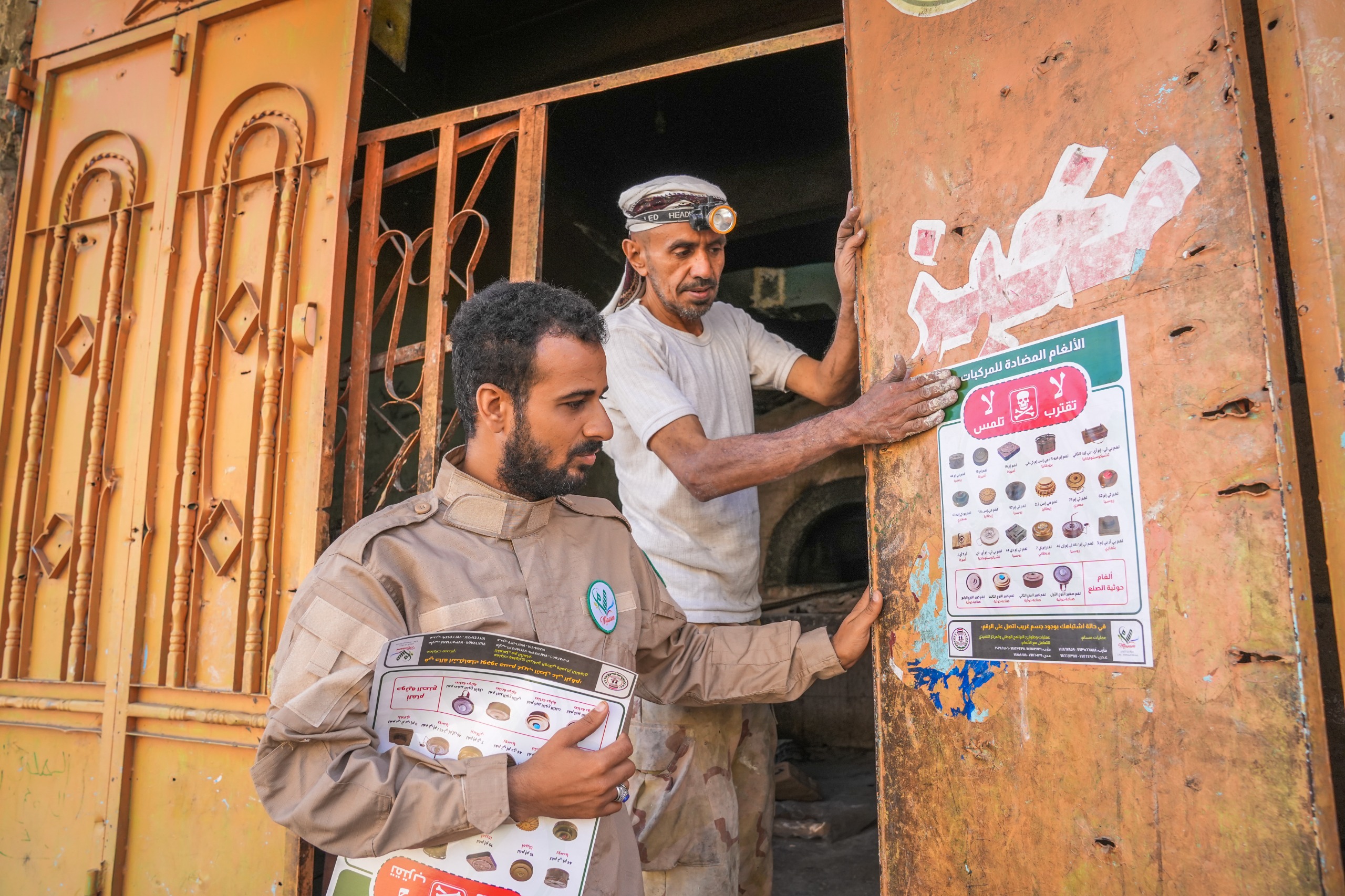
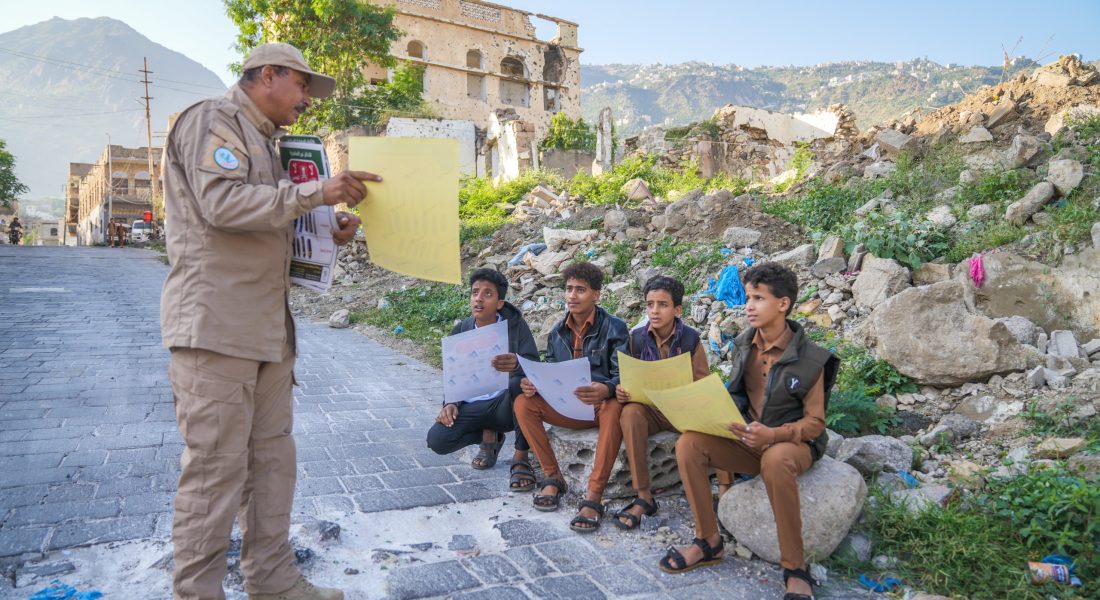
Elsewhere, in Al Dhale’s Qa’atabah District, explosive ordnance risk education (EORE) delivered through Project Masam’s awareness campaigns reached children as well as adults. In one community, an eight-year-old girl, Radwa Muthana Nagi Al-Gini, recognised a landmine near her home after learning how to identify dangerous objects and alerted her family, leading to its safe removal before anyone was harmed. In Hajjah’s Al-Makhazen area, Hassan Bilal, a farmer who attended a community awareness session, reported suspected explosive remnants on his land, prompting Project Masam demining Team 38 to clear an anti-tank minefield and restore safe access to farmland for his family and neighbours.
In Taiz’s Al-Jahamliyah district, Project Masam teams carried out EORE awareness campaigns to help civilians better understand how to protect themselves from explosive threats and how to report suspected hazards safely. These efforts strengthened cooperation between communities and demining teams and reinforced a shared sense of responsibility for protecting lives.
Each of these examples reflects a human-centred approach in practice. Demining is not limited to removing explosives: it is about listening to communities, understanding how contamination affects daily life, and responding in ways that reduce risk and restore dignity. When land is declared safe, the impact extends beyond physical security. Farmers return to their fields, markets and roads reopen, children walk to school with confidence, and displaced families begin to consider returning home.
The human cost of explosive contamination in Yemen remains significant, with civilians continuing to face injury, loss, and fear from hidden remnants of war. Project Masam’s sustained efforts directly reduce this risk and help create the conditions needed for recovery and stability. Safe land forms the foundation upon which livelihoods can be rebuilt and communities can regain control over their future.
International Human Solidarity Day (20 December) reminds us that the consequences of conflict do not end when fighting stops and that responsibility for addressing its remnants is shared. Project Masam’s work demonstrates how solidarity is expressed through action, partnership, and long-term commitment to civilian protection. By making land safe and supporting communities to move forward without fear, mine action becomes a powerful expression of shared humanity and collective responsibility.
On International Human Solidarity Day, the focus turns to the importance of sustained engagement. Addressing explosive contamination requires time, expertise, and continued cooperation, and Project Masam remains committed to maintaining this effort in support of safer environments for civilians across Yemen.