
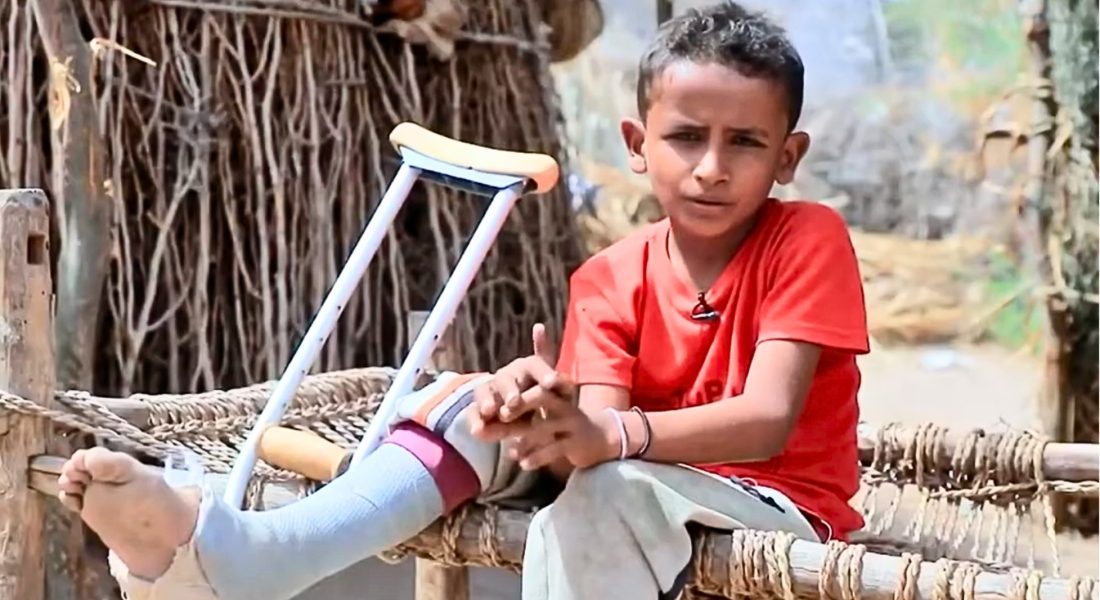
New figures released by Save the Children show that landmines and unexploded ordnance continue to pose a severe threat to children across Yemen, accounting for nearly half of all child casualties despite the reduction in active fighting.
The data covers the period since April 2022, when a United Nations brokered truce came into effect between the internationally recognised government and Houthi forces. Since the escalation of the conflict in 2014, large areas of Yemen have been contaminated with Houthi landmines and explosive remnants of war, particularly in frontline and previously contested areas where mines were laid extensively. While the truce led to a significant decrease in large scale hostilities, these explosive hazards remain in the ground and continue to cause civilian harm.
According to Save the Children, 1,182 children have been killed or injured since April 2022. Of these, 511 cases were caused by landmines and explosive remnants of war, highlighting the continued impact of explosive contamination on civilians, particularly in areas previously affected by conflict.
The data shows that children remain especially vulnerable to these threats. Many incidents occur in farmland, near homes, or along routes used daily by communities, where explosive devices remain hidden or undetected.
Project Masam for mine clearance in Yemen confirmed that these findings reflect the reality faced by demining teams on the ground. The humanitarian landmine clearance organisation’s Managing Director Ousama Algosaibi said the figures highlight the scale of the risk posed by landmines and unexploded ordnance.
“Nearly half of child casualties in Yemen are caused by landmines and UXO. We see the impact of these threats every day in the field, where explosive devices continue to harm civilians and affect entire families,” he commented.
“For those who survive, the consequences are often life changing. Many children suffer permanent injuries, including loss of limbs, alongside long term psychological trauma. In a country where healthcare services remain limited due to the economic crisis and ongoing conflict. these injuries can affect the rest of their lives and place additional strain on families and communities.”
He added that explosive contamination continues to limit safe access to land, roads, and essential services, placing communities at ongoing risk.
“These devices remain in areas where people live, work, and move. Their presence continues to endanger civilians, particularly children, and requires sustained clearance efforts to reduce harm and protect communities,” he said.
Project Masam continues to carry out clearance operations across multiple governorates, alongside risk education activities aimed at raising awareness among civilians and reducing the likelihood of accidents.
The project emphasised that addressing the threat of landmines and unexploded ordnance remains critical to protecting lives and supporting recovery efforts across Yemen.