
Landmines and explosive remnants in Yemen claim lives and block futures every day. But did you know that clearing them unlocks progress toward the United Nations Sustainable Development Goals (UN SDGs) far beyond immediate safety?
Through its work across Yemen, Project Masam supports multiple UN SDGs, reinforcing the vital link between clearance, prevention, and long-term recovery. Indeed, since mid-2018, Project Masam has cleared 537,505 landmines and explosive threats, making over 75 million square metres of land safe and enabling communities to rebuild in highly contaminated governorates such as Hajjah, Taiz, and Shabwah.
This effort removes physical dangers but also fosters economic stability, health improvements, and social equity, demonstrating the interconnected nature of Mine Action with global development priorities.
First, clearing landmines restores access to farmland, grazing areas, and livelihoods, reducing economic vulnerability and enabling families to rebuild self reliance. This directly supports poverty reduction efforts championed by the UN Development Programme (UNDP).
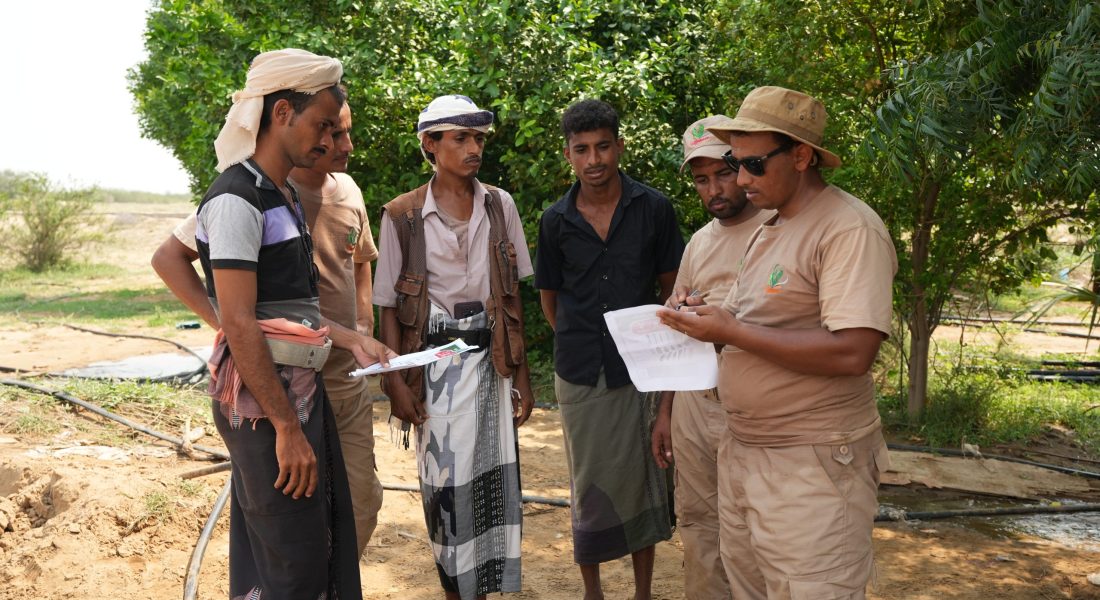
For instance, in Al-Makhzen village in Hajjah’s Midi district, farmer Hassan Bilal reported suspected mines after attending an explosive ordnance risk education (EORE) session, leading Project Masam Team 38 to clear an anti-tank minefield from agricultural and grazing land that had restricted local movement and farming activities for years. By securing this area, families regained the ability to cultivate crops and tend livestock, boosting household incomes and food security in a region where conflict has displaced many.
Second, removing explosive hazards prevents injury and death, eases pressure on overstretched health services, and supports safer environments for communities. This aligns closely with the work of the World Health Organisation (WHO) on injury prevention and community health.
In Hiran district of Hajjah, Khamaj Abkar lost both legs to a Houthi-planted explosive device while farming, ending his work as a mechanic and straining his family’s resources amid limited medical access. Project Masam’s clearance operations and victim assistance referrals to centres like those run by the King Salman Humanitarian Aid and Relief Centre have helped survivors like him access prosthetics and physiotherapy, reducing long-term health burdens.
Third, landmine clearance and EORE help children travel safely to school and learn without fear, while protecting teachers and school infrastructure.
These outcomes reinforce priorities led by the UN’s International Children’s Emergency Fund (UNICEF). In Hudaydah governorate’s Beit Bish village, Project Masam deminers discovered 11 improvised explosive devices (IEDs) under flooring and in walls at Al-Nasr School, where children had stopped attending due to known contamination. After clearance, communities reported renewed school attendance, with risk education empowering youths like eight-year-old Radwa Muthana Nagi Al-Gini in another district to identify and report a landmine near her home, preventing harm. An accessible method might incorporate oral history sessions led by community storytellers to teach children about hazards, using local folklore to build awareness without relying on materials.
Then, landmine contamination affects women and men differently due to social roles and mobility patterns. Gender responsive clearance and risk education also strengthen women’s participation, safety, and decision making, complementing the work of UN Women.
In rural Hajjah, women like Fatima Hirani suffered life-altering injuries from mines while collecting water or firewood, tasks disproportionately assigned to females, limiting their mobility and community roles. Project Masam’s targeted EORE has increased women’s reporting of hazards, as seen in community sessions along the west coast that encouraged female involvement in safety planning. A fresh approach might involve women-led monitoring teams post-clearance to ensure sustained gender-sensitive recovery, empowering them in decision-making processes and reducing vulnerabilities tied to traditional roles.
Additionally, clearing explosive remnants from residential areas, infrastructure, and access routes enables safer urban recovery and community resilience, supporting inclusive and sustainable settlement planning.
In Shabwah’s Usaylan district, Project Masam cleared 250 anti-vehicle mines from a minefield in Khalidiya to support a water well project, providing drinking water to hundreds of families and expanding agricultural activities in drought-prone areas. A new low-resource perspective might involve residents organising communal work groups to maintain cleared paths with natural barriers like stones or thorny bushes, fostering shared responsibility for safe community spaces.
Demining ancient sites like Timna and Hayd bin Aqeel also restored access to cultural heritage, preserving UN Educational, Scientific and Cultural Organisation (UNESCO)-listed structures and opening potential for eco-tourism to aid local economies. An emerging angle could link clearance to green planning, using cleared lands for renewable energy installations to build climate-resilient communities.
Finally, humanitarian Mine Action reduces conflict legacies, supports civilian protection, and strengthens trust in institutions responsible for safety and recovery, reinforcing peacebuilding objectives across Yemen.
In coastal Dhubab district of Taiz, a family hoarded landmines for sale but handed them over to Project Masam deminers, preventing potential harm and highlighting shifts in community behaviour amid lost livelihoods. Such collaborations with local communities have built trust, as civilian reports lead to rapid clearances in contaminated farms and wells. A grounded initiative, already championed by Project Masam, could feature village “mediation councils” where elders facilitate discussions on handing over explosives, promoting reconciliation and safety through traditional dialogue practices.
Through clearance, EORE, and emergency response, Project Masam shows in practice how humanitarian Mine Action advances the SDG agenda while saving lives daily in Yemen. This momentum shows in our latest data (Project Masam teams cleared 7,554 explosive items in January 2026 alone including 52 anti-personnel mines, 369 anti-tank mines, 7,117 unexploded ordnance, and 16 improvised explosive devices while securing 1.72 million square metres of land for civilian use), as we continue to protect civilian lives and support Yemen’s recovery every day.