
Across Yemen, uncertainty continues to shape daily life. Shifts in leadership and dynamics, escalating complex emergency, and deepening funding constraints have placed additional strain on an already fragile humanitarian environment. The United Nations this week warned that reduced resources are pushing essential services closer to breaking point, even as civilian needs remain acute. In this context, we believe that the continuity of principled humanitarian action matters more than ever.
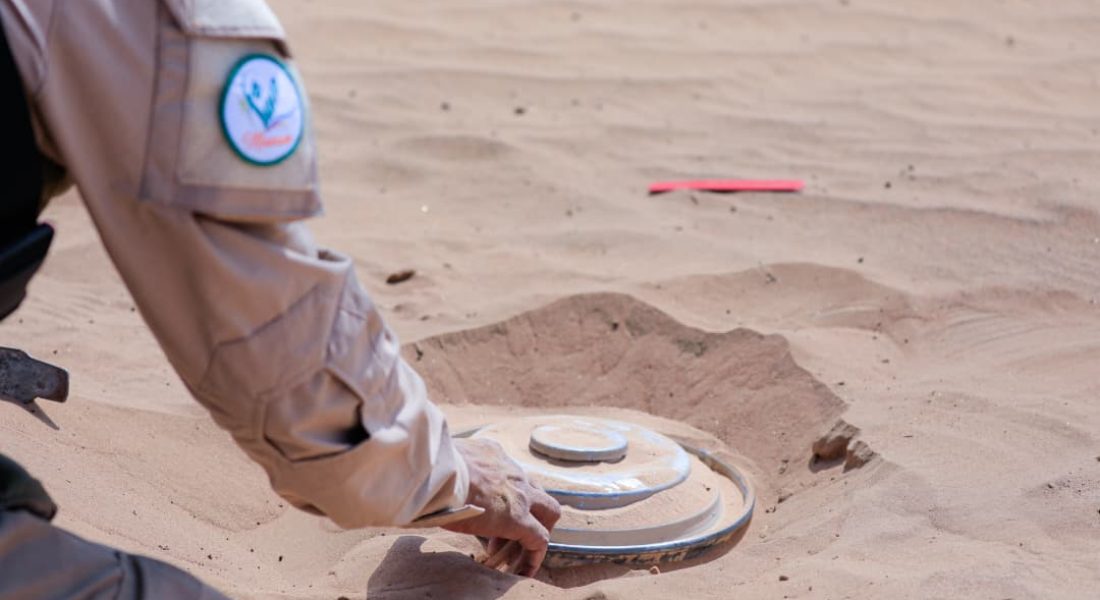
At Project Masam, we remain focused on a single purpose: reducing the harm caused by Houthi landmines and explosive remnants of war.
Our ability to continue this work rests on the consistent and considerable support provided by the Kingdom of Saudi Arabia. This sustained backing allows our operations to continue without interruption at a time when many humanitarian programmes are substantially scaling back or closing entirely.
Guided by humanitarian principles and operational neutrality, we do not engage in politics. Our work is grounded in cooperation with local authorities, community leaders, and affected populations, ensuring that clearance efforts respond directly to civilian needs on the ground.
Explosive contamination continues to restrict movement, livelihoods, and recovery long after active fighting subsides. Landmines and unexploded ordnance, such as improvised explosive devices (IEDs), remain embedded in farmland, villages, access routes, and infrastructure, shaping daily decisions for families attempting to return, rebuild, or sustain basic economic activity. For us, clearance is not only a technical task, but a necessary step toward dignity, recovery, and accountability to civilians who have borne the long-term consequences of conflict for over a decade.
Now in our eighth year of operations, Project Masam’s record reflects this sustained commitment. Indeed, since mid-2018, our teams have cleared 531,868 explosive devices and released more than 76 million square metres of land back to safe civilian use.
Each area cleared restores access to homes, fields, schools, and services, while reducing the risk of injury or death for communities navigating contaminated environments. These results are made possible by long-term, reliable funding that allows for strategic planning, investment in skilled national staff, and continued engagement with affected communities.
We recognise that clearance alone is not sufficient to protect civilians, as risk awareness remains a critical component of humanitarian mine action, particularly in contexts where exposure to explosive hazards is woven into everyday survival.
Our Explosive Ordnance Risk Education (EORE) programme reflects this reality through targeted, evidence-based engagement. Since its launch, our EORE activities have reached over 28,458 people, including 14,091 boys and 7,555 girls, alongside 4,677 men and 2,135 women. This data highlights how risk is shaped by age, gender roles, mobility, and livelihood activities, and why education must be tailored accordingly across Yemen.
Children remain disproportionately exposed, whether through grazing animals, collecting scrap metal, assisting with farming, or playing in contaminated areas. Women and men face different risks linked to water collection, agriculture, travel routes, and access to services. By addressing these realities directly, our EORE work strengthens trust with communities, encourages timely reporting of suspected hazards (and handing over large quantities of explosive ordnance), and improves the accuracy of clearance prioritisation.
In a period marked by instability and shrinking humanitarian resources, our role remains clear.
With the continued support of the Kingdom of Saudi Arabia, Project Masam will maintain its humanitarian mandate and operational presence, working alongside Yemeni communities to reduce harm and restore safe access to land.
The numbers tell a story of sustained effort, but behind each figure are lives protected, injuries prevented, and pathways reopened for recovery. As long as explosive contamination persists, we remain committed to protecting civilians and supporting the conditions necessary for lasting peace and justice in Yemen.