
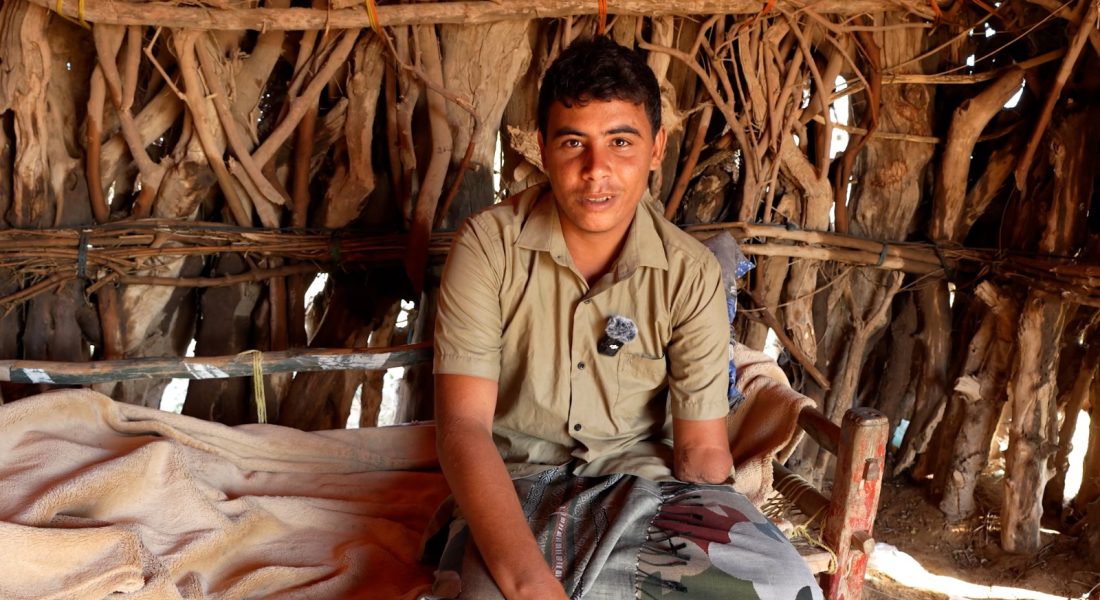
Taha Atin, a 19-year-old from Al-Atna village in Haradh district, Hajjah Governorate, was injured by an anti-personnel landmine while herding sheep on farmland near his community.
Before the incident, Taha supported his family despite living with a physical disability. He travelled regularly by motorcycle to markets in Hiran district to earn an income.
Taha told Project Masam: “I was herding sheep on our farm near the village when I saw an unfamiliar object on the ground. I did not realise it was dangerous. When I touched it, it exploded. The explosion caused the loss of my left hand and injured other parts of my body.”
Following the explosion, Taha required medical treatment and was left with long-term injuries. The incident further limited his ability to work and support his family.
Taha explained that landmines and improvised explosive devices remain present around villages and agricultural land in the area, affecting daily life and movement.
“Landmines are spread around our villages and farms. People are afraid to move freely, and access to land is restricted. We ask for these areas to be cleared so that we can live and work safely,” he said.
In northern Hajjah Governorate, explosive contamination continues to affect civilian safety and livelihoods. Agricultural land, grazing areas, and local routes remain hazardous in some locations, limiting movement and access to income for local communities.
Anti-personnel mines are prohibited under international law because they are designed to be triggered by human presence and continue to cause civilian harm long after conflicts end; in Yemen, these devices have been widely used by the Houthi group and remain a significant threat to civilian safety.