Across Yemen, people living with disabilities face challenges that affect many parts of daily life. Access to healthcare is often limited, travel between villages can be difficult, and families caring for relatives with impairments rarely receive stable support. These pressures sit alongside wider difficulties caused by conflict, economic strain and damaged infrastructure.
Recent estimates suggest that 4.5 to 4.9 million Yemenis live with some form of disability, roughly 15% of the population, though the real number is likely higher due to underreporting.
Children are also significantly affected. Assessments indicate that around 18% of children in Yemen have functional difficulties in at least one area of daily activity, including mobility, vision, hearing, communication or learning. These numbers highlight how widespread disability is across the country, and how much strain families face as they try to access services.
Project Masam works in many of the areas where these realities are part of everyday life. Our humanitarian landmine clearance operations place us close to communities where people are adapting to impairments caused by conflict, accidents or explosive remnants of war, while also coping with the pressures faced by the wider population. Spending time with families offers us a direct view of the practical ways people manage these challenges.
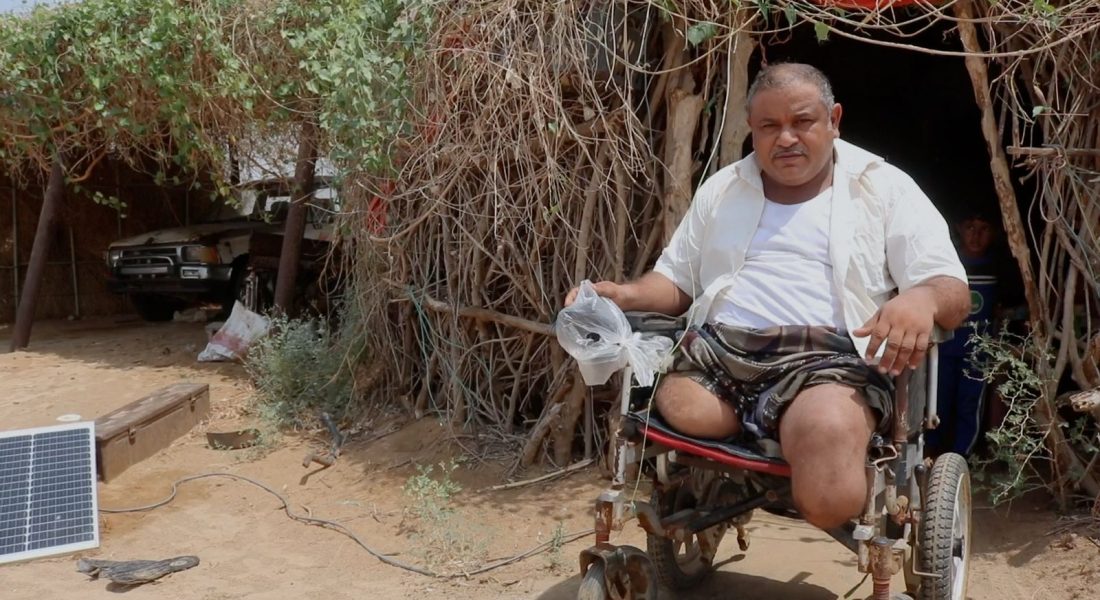
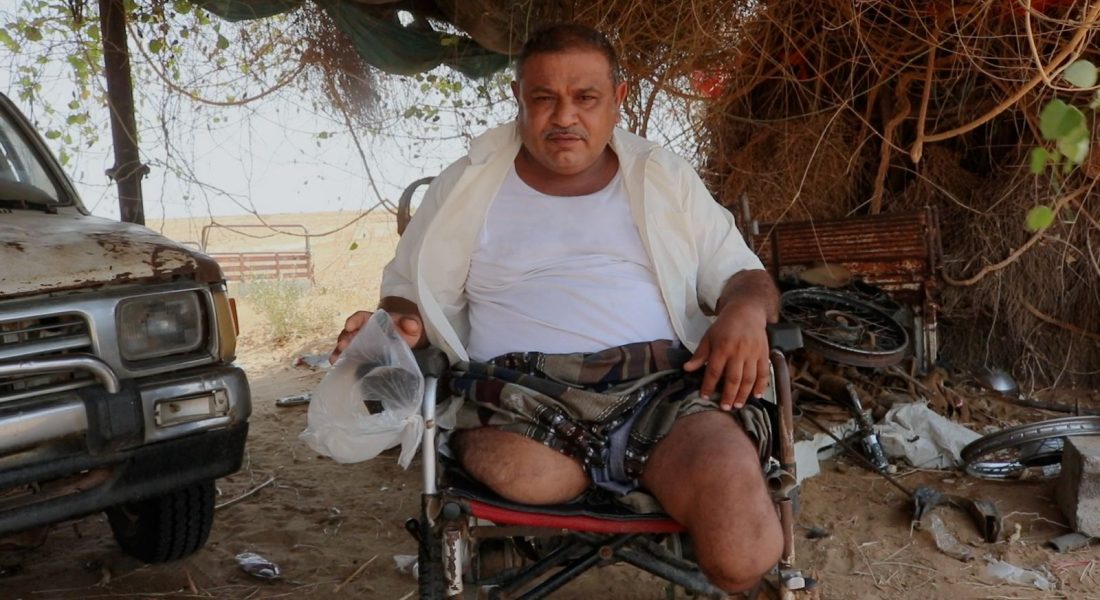
Khamaj Abkar returned to his home and farmland in Al-Khadra, Hiran district in Hajjah, after more than four years of displacement. While inspecting his property, he stepped on an explosive device that had been left by Houthis during the conflict. The blast severed both of his legs and left him with life-changing injuries. Before the explosion, Khamaj worked as a car mechanic and farmer, supporting his family through a combination of skilled work and agriculture. The loss of his legs ended his ability to work in the same way, placing his household under severe economic strain and leaving him dependent on limited rehabilitation options.
One of the people our teams also met is Ahmed Seif, a father of three who lost both legs when he stepped on a landmine. He spent weeks in hospital before returning home, where the long term effects of his injuries now shape how he moves, works and supports his household. His experience reflects those of many Yemenis who must adjust quickly to reduced mobility in an already demanding environment.
We also spent time with Saeed Abdul Qaher, a teenager who lost his left leg in a mine blast. His injury kept him from continuing his studies. Reaching school became too difficult, and damaged roads in his area meant that even short journeys required help. Despite this, Saeed continues looking for ways to remain engaged in community life, supported by friends and family who play an important role in his everyday routines.
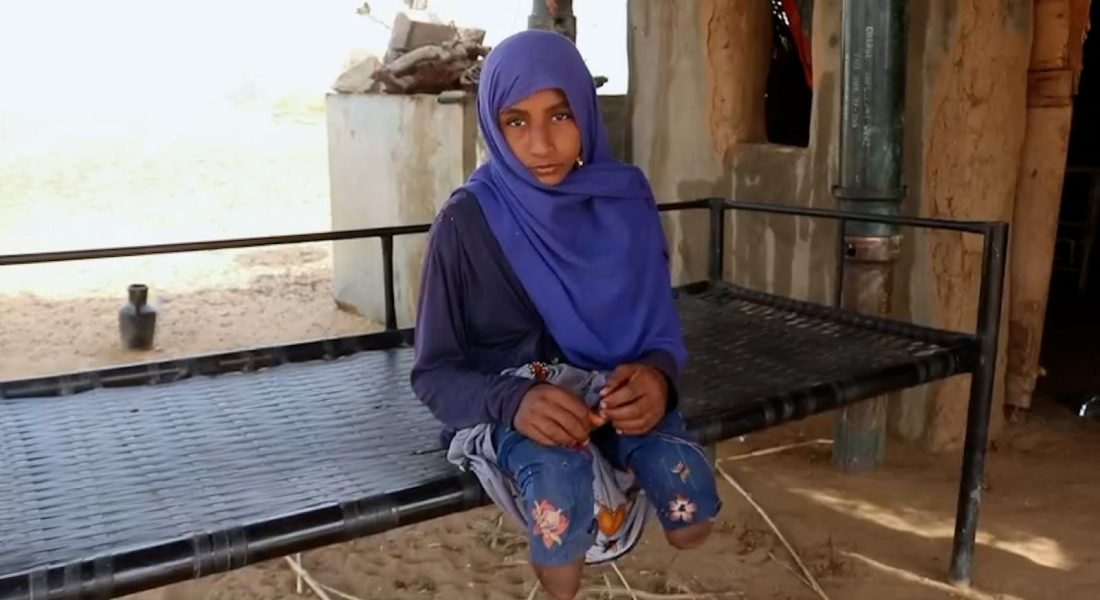
Another experience comes from thirteen-year-old Ilham Sahili, in Hajjah governorate. A mine exploded near her home, leaving her with injuries that changed the path she expected her life to take. Her education, independence and sense of safety were all affected. Her story highlights how children are among the most vulnerable, and how disabilities acquired early in life leave lasting impacts.
Together, these stories show how people adapt to new impairments while also managing the broader pressures that shape life in Yemen. They reflect the risks communities live with, but also the practical ways families incorporate these changes into daily routines in a context where constant adjustment is already normal.
For people living with disabilities, movement becomes one of the most challenging aspects of daily life. Damaged roads or unpaved tracks, long distances to health services and limited transport make even simple activities difficult. These barriers affect the entire population, but they disproportionately affect people with disabilities. A recent assessment found that 81% of people with disabilities in Yemen are unable to access humanitarian services at all, often because they cannot physically reach the locations where assistance is distributed. For many people with reduced mobility, access to wheelchairs or other aids is limited, and even when equipment is available, rough terrain often makes it extremely difficult to use.
When access improves, even slightly, the change is noticeable. When previously mined routes become safe and easier to travel, people can reach clinics, schools and nearby villages without as many obstacles. These small improvements make day-to-day movement more manageable for families and individuals who were previously cut off and help connect people with the services they need.
In conversations with survivors and affected families, our teams hear frequently about the forms of support that remain difficult to obtain. People describe the need for mobility aids, rehabilitation services, physiotherapy and psychological support. Although assessments suggest that around 16% of people with disabilities require rehabilitative assistance, such services remain scarce and difficult to reach. Many also speak about the challenges of finding work that matches their capabilities after injury.
Project Masam does not provide medical rehabilitation itself, but our teams do offer forms of victim assistance where possible. This includes helping survivors reach medical care, supporting families in arranging treatment and directing people to organisations that provide specialised services, such as King Salman Humanitarian Aid and Relief Centre (KSRelief)’s Artificial Limb and Physiotherapy Centres in Aden (with additional locations in Taiz, Marib). These steps do not address every challenge survivors face, but they are an important part of how we try to support people after an explosive incident.
As we mark the International Day of Persons with Disabilities, several practical measures would make a meaningful difference to the lives of people living with impairments in Yemen. These include safer access to health facilities, expanded rehabilitation services, better availability of mobility aids, increased accessibility within humanitarian programming, and sustained attention to victim assistance initiatives. Clearance work reduces risk, but survivors need long term support that continues well beyond the immediate aftermath of an incident.
Speaking about the day, Project Masam’s Managing Director, Ousama Algosaibi, said: “Every survivor deserves the chance to recover with dignity. Clearing land saves lives, but we must also make sure that those who have already been injured are not forgotten. Supporting victim assistance, improving access to treatment and ensuring safe movement for people with disabilities should be priorities for all of us working in Yemen.”
These goals require long term commitment from local authorities, humanitarian partners and the wider international community.
For our part, Project Masam will continue clearing dangerous areas, sharing risk awareness and doing what we can to help survivors reach the care they need. The more support that reaches people living with disabilities, the more opportunities they will have to participate fully and safely in their communities.
Published on Medium.